 Kula Journal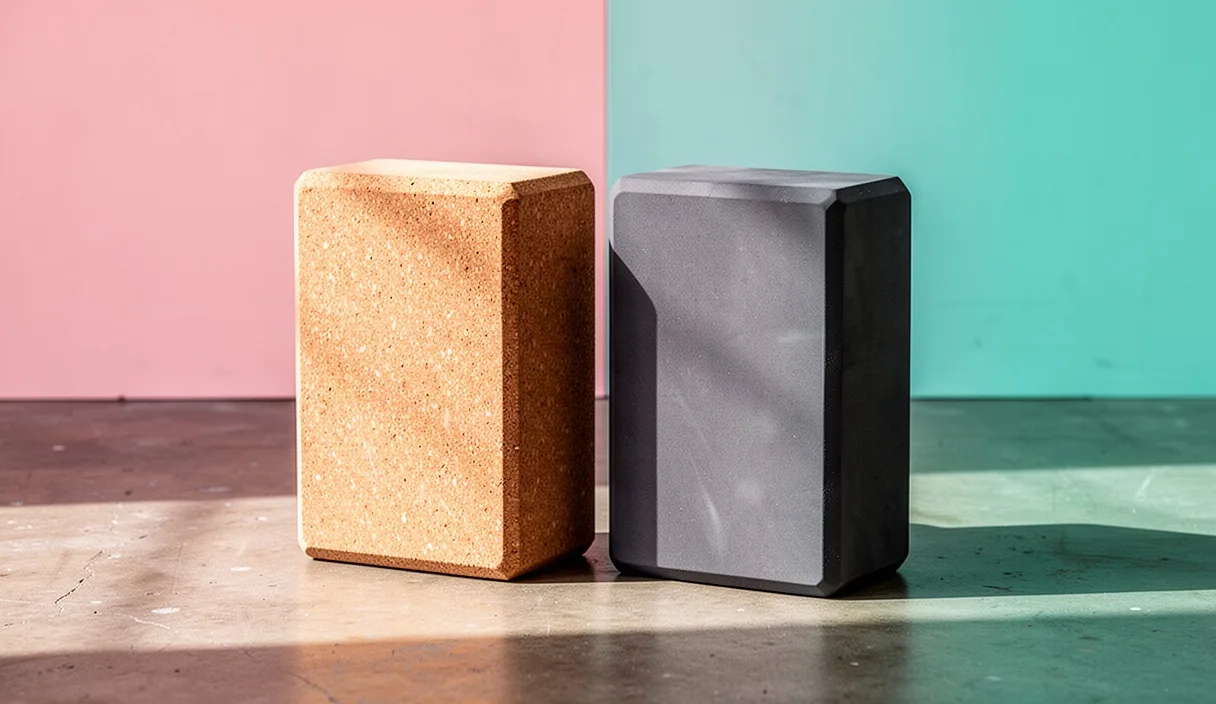

Yoga blocks bring the floor closer to your hands, support the pelvis in seated postures, and stabilize the joints during standing balances. Most studios stock either closed-cell ethylene-vinyl acetate (EVA) foam blocks or pressed natural cork blocks. Both share the standard dimensions of nine inches in length, six inches in width, and four inches in thickness, with thinner versions running at three inches thick. Despite identical dimensions, they perform differently when loaded with human body weight.
Choosing between cork and foam comes down to two physical properties: mass and density. Foam yields under localized pressure, which protects bones during restorative floor poses. Cork resists deformation, which creates a secure base during standing poses such as half moon or supported handstand. Understanding the mechanical differences helps you pick the right tool for your specific movement practice or your studio floor.
Weight differences between cork and EVA foam
The primary difference you feel when picking up these blocks is their mass. A standard nine-by-six-by-four-inch EVA foam block weighs between six and twelve ounces (170 to 340 grams), depending on the density of the foam blend. Budget foam blocks purchased in bulk often sit at the lower end of that scale, around six to eight ounces. Studio-grade high-density foam blocks weigh closer to ten or twelve ounces. You can lift, kick, or reposition an EVA block with your toes without breaking your stance.
A natural cork block of the same dimensions weighs between 1.6 and 2.4 pounds (725 to 1088 grams). That is roughly three to four times the weight of a standard foam block. The added mass comes from the bark of the cork oak tree, which is granulated, mixed with polyurethane or resin binders, and compressed under hydraulic heat presses. This process produces a solid, rigid brick.
| Property | Standard EVA Foam Block | High-Density EVA Foam Block | Pressed Cork Block |
|---|---|---|---|
| Average Weight (9x6x4 in) | 7 oz (200 g) | 11 oz (310 g) | 34 oz (965 g) |
| Material Structure | Closed-cell synthetic polymer | Dense closed-cell polymer | Compressed natural granules |
| Tipping Resistance | Low: easy to knock over on high edge | Moderate: stable on wide face | High: stays planted on narrow edge |
| Portability | High: fits easily into commuter bags | High: negligible carry weight | Low: adds significant bulk to luggage |
This weight differential changes how the block behaves on the mat. If you place a foam block on its narrow four-inch side and graze it with your foot as you step forward into a lunge, the block slides or falls over. A cork block stays where you set it. The heavier base creates traction against the mat surface, which gives practitioners more confidence when transferring lateral loads onto the prop.
Compressive strength under full body weight
Compressive strength measures how much downward force a material can tolerate before it deforms or crushes. EVA foam relies on microscopic, gas-filled plastic cells. When you press your body weight into foam, the gas pockets compress. A practitioner weighing 180 pounds who places a hand on a low-density foam block during side angle pose will sink down a quarter of an inch to a half inch into the material. The block compresses beneath the heel of the hand, which alters the wrist angle and can strain the joint.
Cork has high compressive resistance. The cellular structure of cork consists of microscopic fourteen-sided polyhedrons filled with air-like gas, surrounded by strong suberin and lignin walls. When loaded with direct body weight, cork barely compresses. The surface gives by less than a millimeter under the palm. Your skeletal frame receives immediate feedback, matching the firm resistance of a hardwood floor.
This rigidity matters for arm balances and inversions. Consider these specific load scenarios:
- Supported Bridge Pose: Placing a foam block under the sacrum distributes load evenly, cushioning the bone against the floor. Cork can feel like a brick against the lower vertebrae if placed incorrectly.
- Half Moon Pose (Ardha Chandrasana): Placing a single hand on a tall cork block gives a solid column of support. A foam block can wobble or list to the side if your center of gravity drifts past the center axis.
- L-Sit or Lifted Scale Pose (Tolasana): Pressing palms down on two cork blocks keeps your wrists neutral. Foam yields under the palm heels, forcing the wrists into extreme dorsiflexion.
If you have wrist pain or hypermobility, the lack of give in cork is an asset. It creates a stable, unchanging floor height. If you have bone spurs or joint inflammation, the unyielding nature of cork can aggravate contact points, making foam the more sensible choice.
Edge design and comfort during restorative poses
The manufacturing process determines how the edges of each block are shaped. Most modern yoga blocks feature beveled or chamfered edges, where the sharp ninety-degree corner is ground down to a forty-five-degree bevel. The depth and softness of this bevel determine how comfortable the prop feels against your soft tissue.
EVA foam blocks allow for generous radius corners. Because foam is molded and cut easily, the edges are rounded and forgiving. In supported restorative poses, such as a supported fish pose where the block runs vertically along the thoracic spine, foam contours slightly to the rib cage. The edges do not pinch the scapulae or press uncomfortably into the active vitality spinae muscles. A restorative class using foam allows long holds of seven to ten minutes without bruising the skin or irritating the periosteum.
Cork blocks feature smaller, firmer bevels. The edges are sanded smooth, but the material underneath does not yield. When used beneath the thoracic spine or behind the heart, a cork block can dig into the back. Practitioners often need to fold a Mexican cotton blanket over the top of a cork block to soften the contact area during restorative sessions.
Matching the edge to the posture
- Thoracic spine openers: Choose foam to prevent direct pressure on the spinous processes of the spine.
- Psoas release over the block: Choose foam to allow the abdomen and hip points to sink without sharp boundary edges.
- Foot calf stretches: Place the ball of your foot on the bevel of a cork block. Cork holds its crisp edge under your full weight, giving your calf an exact, consistent angle of stretch.
Hygiene, sweat absorption, and wiping down
Studios run through dozens of students each day, which makes prop sanitation a daily operational task. The chemical composition of the block determines how it reacts to sweat, body oils, and liquid sanitizers.
EVA foam is a closed-cell plastic. Moisture cannot penetrate the surface layer of a well-molded foam block. Sweat pools on the exterior surface instead of soaking into the core. This makes foam blocks quick to wipe down between classes using common quaternary ammonium sprays, alcohol-based solutions, or soap and water. However, cheap foam blocks with pitted, porous surfaces can trap oils in tiny surface tears, eventually developing skin-oil stains and odors that cannot be scrubbed out.
Cork is naturally antimicrobial due to suberin, a waxy substance present in the cell walls of the cork oak tree. Suberin repels moisture, resists rot, and inhibits the growth of bacteria and mold. However, the surface of a cork block consists of tiny granules bonded together. It absorbs fine layers of perspiration and skin oils faster than closed-cell foam. While cork dries quickly and does not hold onto musty smells, it will stain over time if used regularly in hot yoga environments.
Cleaning procedures by material
To clean EVA foam blocks, spray the surface thoroughly with an all-purpose studio disinfectant. Let the liquid sit for thirty seconds, then wipe dry with a microfiber cloth. The blocks dry completely within two minutes and can go straight back into storage cubbies.
To clean cork blocks, do not saturate them with liquid chemicals. Excessive water breaks down the organic binding agents over time. Instead, take a damp rag with warm water and a drop of gentle dish soap or mild vinegar solution. Wipe the faces and edges firmly. Let the blocks air-dry in a well-ventilated room before stacking them. Stacking damp cork blocks directly against one another traps moisture between the faces and can degrade the binders.
Cost per unit and life expectancy in studios
Studio owners face different balance sheets when outfitting a room for twenty to forty students. The choice between cork and foam directly affects your upfront investment and your replacement schedules over a five-year cycle.
Standard EVA foam blocks cost between $6 and $14 per unit at wholesale rates. High-density studio-grade foam blocks land between $12 and $18. Pressed cork blocks cost between $16 and $26 per unit. For a studio ordering eighty blocks (two blocks per mat for forty stations), foam requires an initial spend of roughly $640 to $1100, while cork requires an investment of $1300 to $2000.
Life expectancy shifts the value calculation. Foam blocks have a typical lifespan of two to four years in a commercial setting. Over time, foam suffers from physical wear:
- Edges round out and lose structural integrity.
- Fingernails, rings, and equipment racks gouge chunks out of the corners.
- Repeated heavy loads compress the center of the block, giving it an hourglass bow.
Cork blocks last between eight and twelve years under heavy studio use. Cork does not crush or lose its rectangular profile. It withstands drops, stacking, and heavy compressive force without permanent deflection. The primary point of failure for cork is edge crumbling, which occurs only if blocks are dropped repeatedly onto rough concrete floors or soaked in liquid sanitizer. For home practitioners, a single pair of cork blocks will easily last a lifetime of practice.
Common mistakes
Practitioners often make assumptions about block materials based on marketing claims rather than real-world physics. Here are the most frequent errors observed on the studio floor:
Using soft foam for hand balances: Beginners often choose soft foam because it feels comfortable to hold. However, soft foam compresses unevenly under the palm, which increases wrist strain and destabilizes handstands and arm balances. Use cork or ultra-high-density foam whenever your hands bear your full body weight.
Soaking cork blocks in sanitizer: Submerging cork blocks or spraying them with heavy bleach mixtures degrades the adhesives holding the cork granules together. The block will begin to shed crumbs from its corners. Treat cork like natural wood.
Traveling with cork: Packing two cork blocks into a carry-on suitcase adds nearly four pounds to your luggage. If you travel frequently, purchase a separate pair of compact, low-density foam blocks strictly for your travel bag.
Ignoring individual joint conditions: If you experience severe joint mobility, osteopenia, or direct tailbone pain, do not force yourself to use cork because someone labeled it "professional grade." Prop selection is about body support, not durability status. A qualified physical therapist or movement professional can advise you on which material density protects your joints if you have an active injury.
Practical next steps
To choose the right block for your space, assess your class styles, storage capabilities, and transport needs.
If you practice primarily vinyasa, power, or Ashtanga yoga at home, buy a pair of nine-by-six-by-four-inch pressed cork blocks. The structural rigidity gives you the security you need when stepping through, jumping back, or pressing up into balances. You will never need to replace them.
If you run a studio that caters heavily to yin, gentle, or restorative formats, purchase high-density EVA foam blocks. They offer sufficient stability for light balances while keeping students comfortable during sustained floor postures. Ensure you choose blocks labeled explicitly as high-density to avoid premature sagging.
If you run a multi-disciplinary studio, split your inventory. Stock sixty percent high-density foam and forty percent cork. Instructors can direct dynamic classes to the cork stacks and restorative classes to the foam shelves, extending the life of all your equipment while matching the correct physical tool to the posture.