 Kula Journal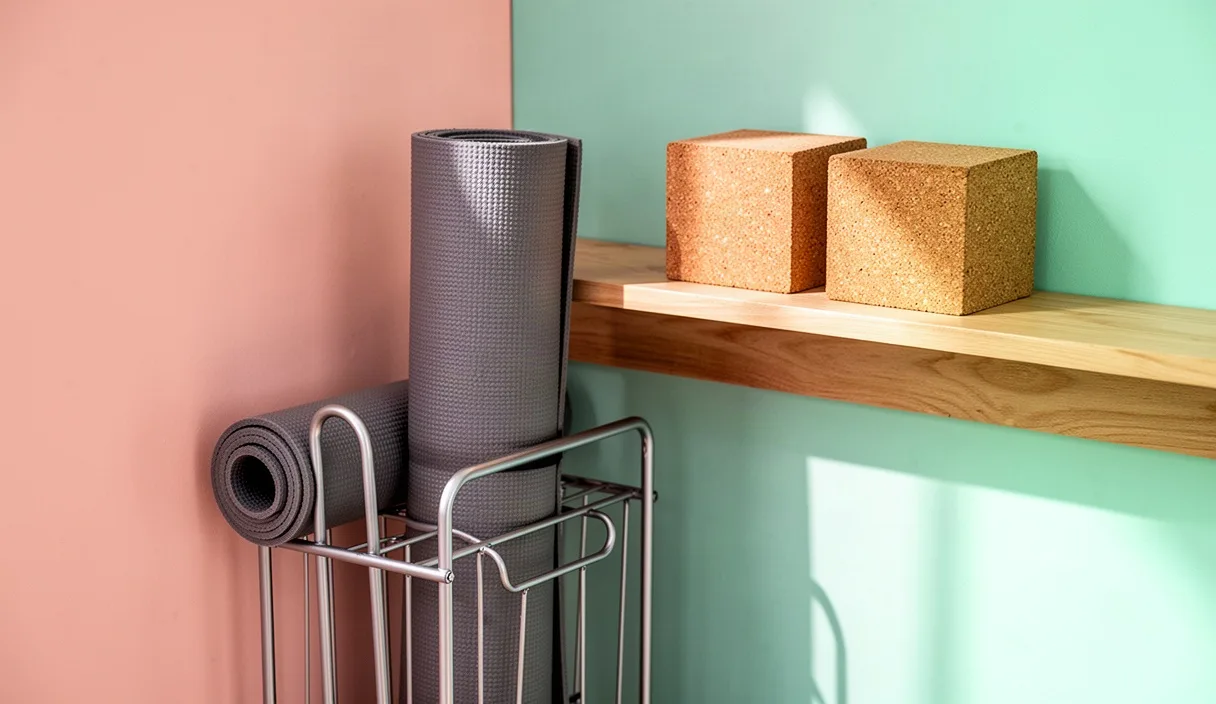

You do not need an empty spare bedroom to practice yoga at home. You need a flat rectangle of clear floor that matches your arm span and a stable base under your feet. Most small apartments and shared bedrooms have this space sitting between the bed, the desk, or the wardrobe. The goal is not an aesthetic studio room with bare white walls. The goal is a dependable physical boundary where your hands and feet move without hitting furniture.
A dedicated practice zone sets clear habits. When the floor remains clear, you roll out the mat without spending ten minutes shifting laundry baskets and side tables first. This guide provides the physical measurements, flooring choices, vertical storage setups, wall clearances, and air management methods required to build a working yoga space in rooms under 120 square feet.
Calculating your minimum clearance zone
A standard yoga mat measures 68 inches long and 24 inches wide. Longer mats run 71 to 84 inches, while extra-wide mats reach 26 or 28 inches. The mat defines your footprint on the floor, but your body needs more room than the rubber beneath it. In standing postures such as Warrior II or Triangle Pose, your stance extends past the edges of a short mat. In wide forward folds, your head and pelvis shift outward.
Your wingspan determines your lateral clearance. Stand upright and extend both arms straight out to the sides at shoulder height. The distance from the tip of your left middle finger to the tip of your right middle finger roughly equals your total height. A person who stands 5 feet 8 inches tall has a wingspan of roughly 68 inches. You need at least that much open width along the center of your practice line. Without this buffer, your fingertips will drag across drywall, strike bookcases, or knock items off a nightstand during lateral transitions.
Vertical clearance requires the same attention. Stand on your mat and reach both arms straight toward the ceiling. Add 6 inches to that height to account for small jumps in Sun Salutations or heels lifting during balance poses. Measure from the floor to the lowest hanging hazard. Ceiling fans, light pendants, and sloped attic ceilings are common hazards. If a ceiling fan hangs below your reached fingertips, offset your mat by 18 inches to keep your hands out of the path of the fan blades.
Use these boundary figures to mark out your space:
- Compact footprint: 6 feet long by 4 feet wide. This allows basic linear movement, forward folds, and seated work. Lateral arm sweeps must bend at the elbows into cactus arms.
- Standard functional footprint: 7 feet long by 5 feet wide. This accommodates full arm extensions, Warrior II, and prone backbends like Locust Pose without touching adjacent objects.
- Unrestricted footprint: 8 feet long by 7 feet wide. This allows wide straddles, arm balances, and full rotational movement without spatial compromises.
Floor surfaces: working on carpet versus hardwood
Hardwood, concrete, and engineered laminate provide the most reliable foundations for yoga. These surfaces are rigid, flat, and non-compressible. When you press the ball of your big toe or the heel of your hand into bare wood, the floor resists with equal force. This solid resistance aids balance in single-leg postures such as Tree Pose. The primary drawback of hardwood is joint pressure. Thin mats placed directly on concrete or oak can cause pain in the knees, hip points, and wrists during kneeling postures.
Carpet creates the opposite problem. Medium-pile and high-pile carpets sit on top of soft foam padding. When you stand on carpet, your feet sink into the fibers. The foam shifts under shifting weight, forcing the stabilizer muscles in your ankles and feet to work harder to maintain balance. During Downward-Facing Dog, horizontal tension pushes your hands forward and your feet back. On carpet, a standard mat will bunch up, ripple, and slide forward because the carpet pile shears beneath it.
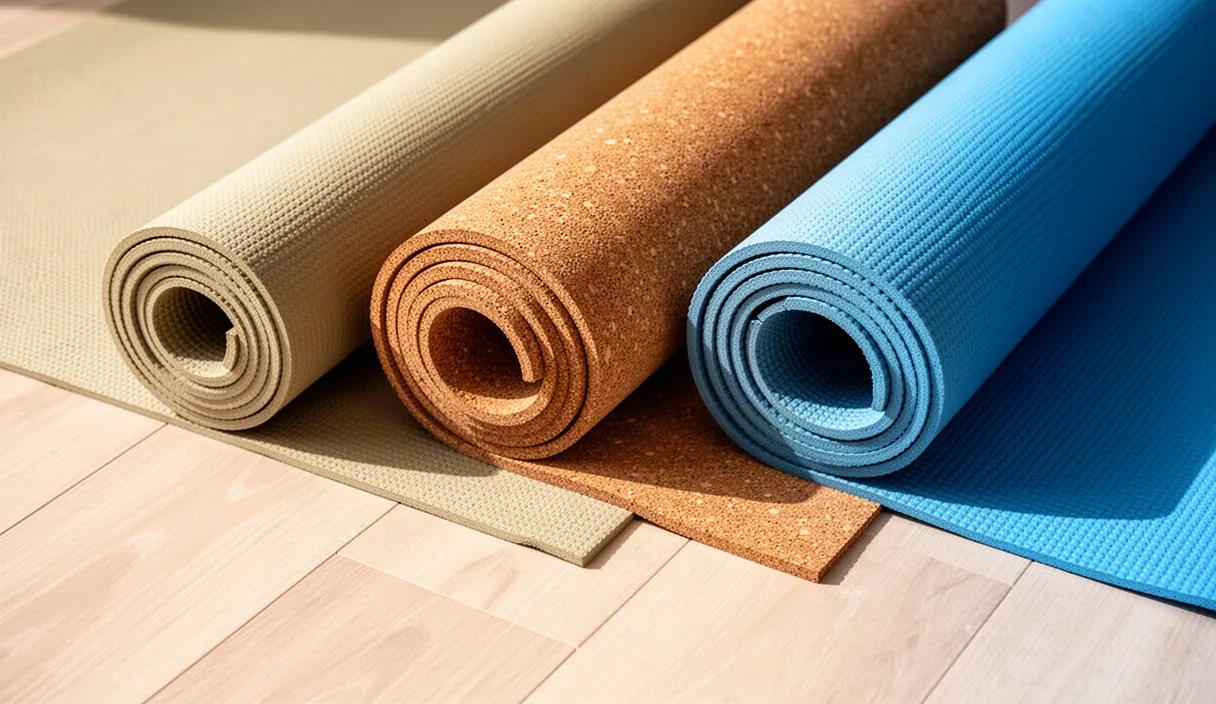
You can correct carpet instability without ripping up flooring. Choose a dense, heavy mat made of natural rubber or high-density PVC weighing between 6 and 9 pounds. Avoid lightweight travel mats made of thermal plastic elastomer or thin open-cell foam, as these stretch and gather on carpet. If the pile is thick, place a sheet of 1/4-inch sanded birch plywood under the mat. A piece cut to 24 inches by 72 inches at a hardware store provides a rigid subfloor that rolls or slides out of sight behind a dresser when finished.
| Floor Type | Balance Stability | Traction Behavior | Joint Cushioning | Best Mat Choice |
|---|---|---|---|---|
| Hardwood / Tile | High | High; mat grips surface directly | Low to Moderate | 4 mm to 5 mm dense rubber or PVC |
| Low-Pile Carpet | Moderate | Moderate; slight mat creeping | Moderate | 5 mm dense, rigid rubber mat |
| Plush Carpet / Rugs | Low | Poor; mat ripples and shifts forward | High | 6 mm hard PVC mat or plywood underlay |
Vertical storage options for blocks, mats, and bolsters
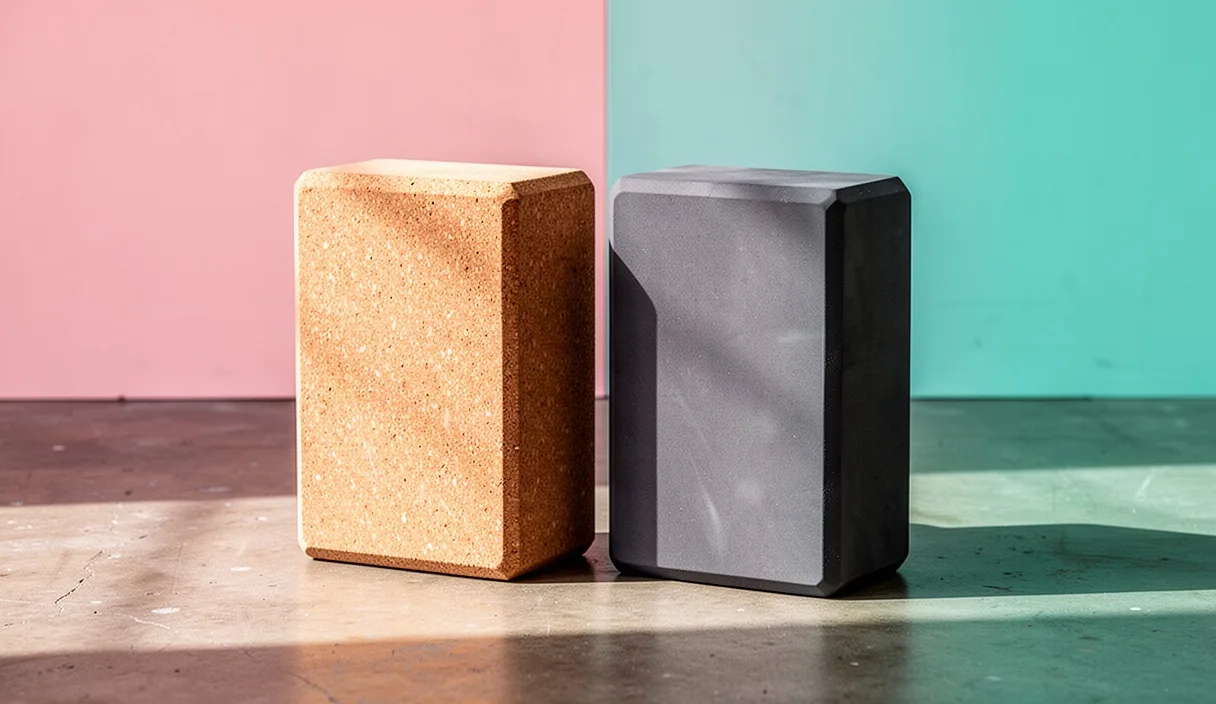
When floor area is scarce, props must live on the walls or behind doors. Leaving blocks, straps, and bolsters on the floor shrinks your usable room and invites dust and clutter. A standard home kit contains one mat, two blocks (typically 4 by 6 by 9 inches), an 8-foot cotton strap, a bolster (often 24 inches long and 6 inches thick), and one or two woven wool blankets. This entire kit fits into two square feet of vertical wall space when mounted properly.
Steel utility hooks and wall brackets offer the cleanest solution for rolled mats. Mount two wide J-hooks 14 inches apart on wall studs. Rest your rolled mat horizontally across the hooks. If you prefer a vertical hang, mount a multi-prong coat rack at eye level. Loop your yoga straps over the upper pegs and hang your mat using a dedicated hanging harness. For blocks and blankets, install a single 10-inch-deep floating shelf 5 feet off the floor. Place your blocks on end and stack folded blankets beside them.
If you rent and cannot drill into the drywall, use door-mounted systems. An over-the-door shoe organizer with deep canvas or mesh pockets holds rolled straps, massage balls, resistance bands, and foam yoga blocks. Most standard foam blocks slide directly into these compartments. For heavy rectangular bolsters, slide them vertically into the gap between your wardrobe and the wall, or place them under the bed frame inside a zip-up canvas storage bag to block floor dust.
Using a clear door or wall section for support
A solid wall is an active tool in asana practice. It replaces a partner for balance adjustments, supports the legs during restorative postures such as Viparita Karani, and catches the feet during inversion entries. In a small room, finding an uninterrupted 4-foot stretch of baseboard requires deliberate planning. Radiators, electrical outlets, light switches, and picture frames often occupy the lower five feet of wall space.
A standard interior door can serve as your practice wall if you set it up safely. The door must close toward you so that your body weight pushes it into the door jamb rather than against the latch mechanism. If you must push against the side that opens outward, turn the lock to keep the door from swinging open during a pose. Ensure the door panel is solid wood or solid-core composite. Hollow-core interior doors flex when kicked up against during handstand practice and can crack under focused heel pressure.
Baseboards and floor moldings create an offset gap at the bottom of the wall. A tall baseboard keeps your hips 1 to 3 inches away from the vertical surface. In restorative leg postures, this gap leaves the lower back unsupported and can strain the hamstrings. Place a firmly folded Mexican blanket or a dense foam block into the corner where the floor meets the baseboard. This bridges the empty space and levels your pelvis against the wall.
Ventilation and room temperature for breath work
Air quality drops rapidly in small, enclosed rooms. In a closed 10-foot by 10-foot bedroom with an 8-foot ceiling, a single person performing vigorous breathing will raise ambient carbon dioxide levels within 40 minutes. Elevated carbon dioxide brings on dull headaches, lethargy, and a sensation of stuffiness. Breath practices like Kapalabhati and Ujjayi require a steady exchange of fresh air to remain comfortable and effective.
Maintain an ambient room temperature between 68 and 72 degrees Fahrenheit for active vinyasa styles. If your practice leans toward restorative postures or long Yin holds, raise the baseline to 73 or 75 degrees. When your body stays motionless on the floor for 5 minutes at a time, core temperature drops, tightening muscles and stiffening connective tissues. Keep a secondary wool blanket within arm's reach to drape over your torso during final rest.
Create active cross-ventilation instead of running an aggressive air conditioner directly over your mat:
- Crack the room window 2 to 3 inches, even during cooler weather, to draw in oxygen.
- Leave the interior room door open by 4 inches to establish a pressure differential.
- Place a compact floor fan in the corner opposite your mat. Point the airflow at the base of the door or toward an empty wall rather than directly at your skin. This circulates the room air without blowing cool drafts across your sweaty neck and shoulders.
- Avoid lighting scented candles or burning dense incense sticks before pranayama. Particulates and artificial fragrances irritate the mucous membranes in the throat and lungs during rapid respiration. If you have respiratory sensitivities, asthma, or chronic bronchitis, consult a physician before using heat lamps or scented diffusers in tight spaces.
Common mistakes
Setting up in a cramped room often leads to avoidable frustrations. Watch for these common spatial errors:
- Buying extra-large props: Oversized round bolsters and double-wide mats consume floor space without adding utility. Stick to a standard 24-inch mat width and a flat rectangular bolster that sits flush against the wall.
- Leaving the mat unrolled permanently: In a multi-use room, a mat left on the floor collects pet dander, shoe debris, and office chair wheel marks. Roll your mat up after every session to protect the grip surface.
- Ignoring swinging doors: Setting your mat within the travel arc of an entry door or closet door creates collision risks if a housemate opens the door while you are in an arm balance or inversion.
- Placing the mat too close to radiators: Cast iron radiators and electric baseboards emit intense dry heat that degrades the rubber compounds of sticky mats and can cause burns if your foot slips during a lunge.
- Practicing on loose throw rugs: Laying a yoga mat over an unanchored decorative rug allows the entire rug to slide across the floorboards during lunges, leading to falls.
Practical next steps
Building your space takes under an hour if you follow a direct order of operations. Start with a tape measure. Locate your intended practice zone and pull the tape to 7 feet long and 5 feet wide. Move any portable furniture, such as laundry hampers or desk chairs, outside of this line.
Next, test your vertical boundaries. Stand in the center of the zone, raise your arms, and sweep them from front to back and side to side. If your hands strike anything, shift the center point of the mat by several inches until your movement is clear.
Clear your vertical storage area. Clear off an existing shelf, set up an over-the-door hanger, or install two wall hooks. Place your blocks, strap, and folded blanket into their storage positions. Finally, crack the nearest window an inch, unroll your mat, and step onto the center to test the floor grip under your feet. Your home space is ready to use.